


No Other Choice: Killing for the Family at the Age of Obsolescence
With the theme of unemployment, it presents a family fantasy anecdote rather the a comment on social problems.
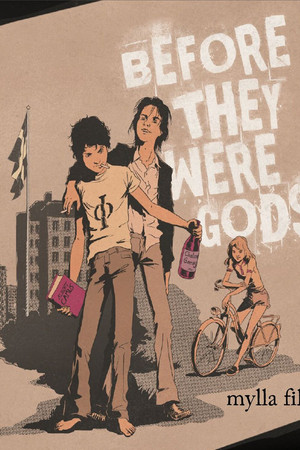


Nick Cave. Joakim Thåström. Today they are seen as rock gods, but in 1971 they were just teenagers. This is a film about friendship, love and creativity, but above all it’s about the limitless power of youth and how we through lust and curiosity together with our pals unconsciously forge our future selves. Thåström is a harsh existentialist while Cave is a struggling agnostic. Thåström is unbrushed and political and Cave a romantic dreamer. Our young heroes influence each other, touch on philosophies and pop culture, and blend it with a typical teenage day which mainly consists of how to skip school and get more beer and how to make the girl of both their dreams fall madly in love with them.
With the theme of unemployment, it presents a family fantasy anecdote rather the a comment on social problems.
This is not a film, it’s a drop tower. A drop tower that you don’t get off of for the vast majority of its 106-minute runtime.
Eventually, “Hobbs and Shaw” introduces us to a Samoan community. Clearly, Johnson’s Samoan roots are on display. Quite frankly, I found this section of the film very intriguing. The “Fast and Furious” franchise has a solid track record in the diversity department
I believe in homages, but there's a proper way to borrow a creative idea instead of making it appear as if you hit the copy and paste button. Most likely, anyone is better off simply reading the books. Or just put on Scream.
The social issues The Half of it takes on are handled well, between the antagonization brought on to Ellie for her race and the conflict that arises from her being gay. Both aspects of her character are built up over the course of the film and don’t seem abrupt or rushed. The film shows racism towards Ellie and her and father in varying levels, from having her schoolmates specifically address her as "Chinese girl” to the fore mentioned way her Dad is treated due to language barriers. The same can be said about Ellie being a lesbian. While she never truly “comes out” in the narrative, that does not undermine her journey of self-discovery from being meaningful. These ideas aren’t thrust upon the viewer in a preachy manor, the scenarios that occur feel believable given the rural setting. The film presents watchers with problems whom those like Ellie may face, and leaves us to sit with them and reflect.
An Indonesian film that brings strong representation of Asian descent in this heart-warming tale of a woman and her dog.