The animals gathered around in confusion: they seemed to remember that, originally, Animal Farm had been a gloomy allegory for the Russian Revolution of 1917 and its eventual downwards spiral into despotism. They brought this concern to Squealer, who assured them that they were misremembering; that Animal Farm was always a children’s film about overconsumption, and that this nasty rumor was almost certainly spread by Snowball and his cohorts in an attempt to overthrow their precious Angel Studios. Squealer assured them that their glorious leader Andy Serkis was handling the matter carefully. And then the pigs went and turned Boxer into popcorn buckets and used the profits from selling him to buy more whiskey.
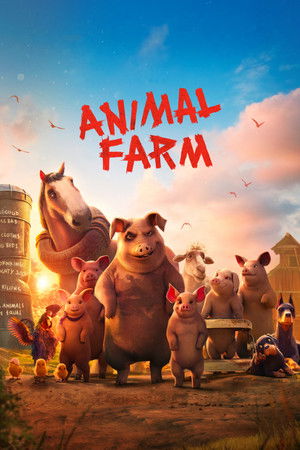
Animal Farm comes to us from the studio that brought us David, Cabrini, and Sound of Freedom, among other movies that are very much not Animal Farm. The concept for this movie sounds like a fever dream on several levels. For example, it’s an animated film starring Seth Rogen and directed by Andy Serkis. Yes, Gollum himself is bringing George Orwell to the living rooms of grandparents of small children. This is not a dream; this is real life.
Turns out, the man who brought Caeser, Snoke, and King Kong to life is about as good at replicating Orwell as I was in the first paragraph of this review. But at least I tried to stick to the spirit of the original story. No such luck with 2026’s Animal Farm. This is egregious commercial slop. This incarnation of Animal Farm is filled with the generic plot points, immature humor, cardboard characters and visual flaws that you have come to know from today’s lesser children’s films.
This movie is, on its face, about overconsumption. But that’s not quite right. Because Napoleon’s downfall in this film isn’t, you know, financial ruin or physical health, like would naturally happen in a film about gluttony. Napoleon’s downfall is being a bad father figure to this film’s newly invented protagonist, Lucky. So is this film about bad parenting? But that has nothing to do with the rest of the plot of the film. It’s just convenient, not coherent, that Napoleon is bad to Lucky. So really, the message of this film is that Napoleon is a big ol’ meanie pants that should go to time out. This film is both targeted to and has the mindset of a prepubescent child.
Any instance of toilet humor should be condemned as the ultimate source of all evil, but admittedly, when Napoleon let out a huge dish of flatulence and then said “this is the Sound of Freedom,” considering who is releasing this movie, I took a vacation to the laughter house. Otherwise, the humor in this film may have gotten the barest, most forced chuckles from me a couple times, but mostly lands flat at best.
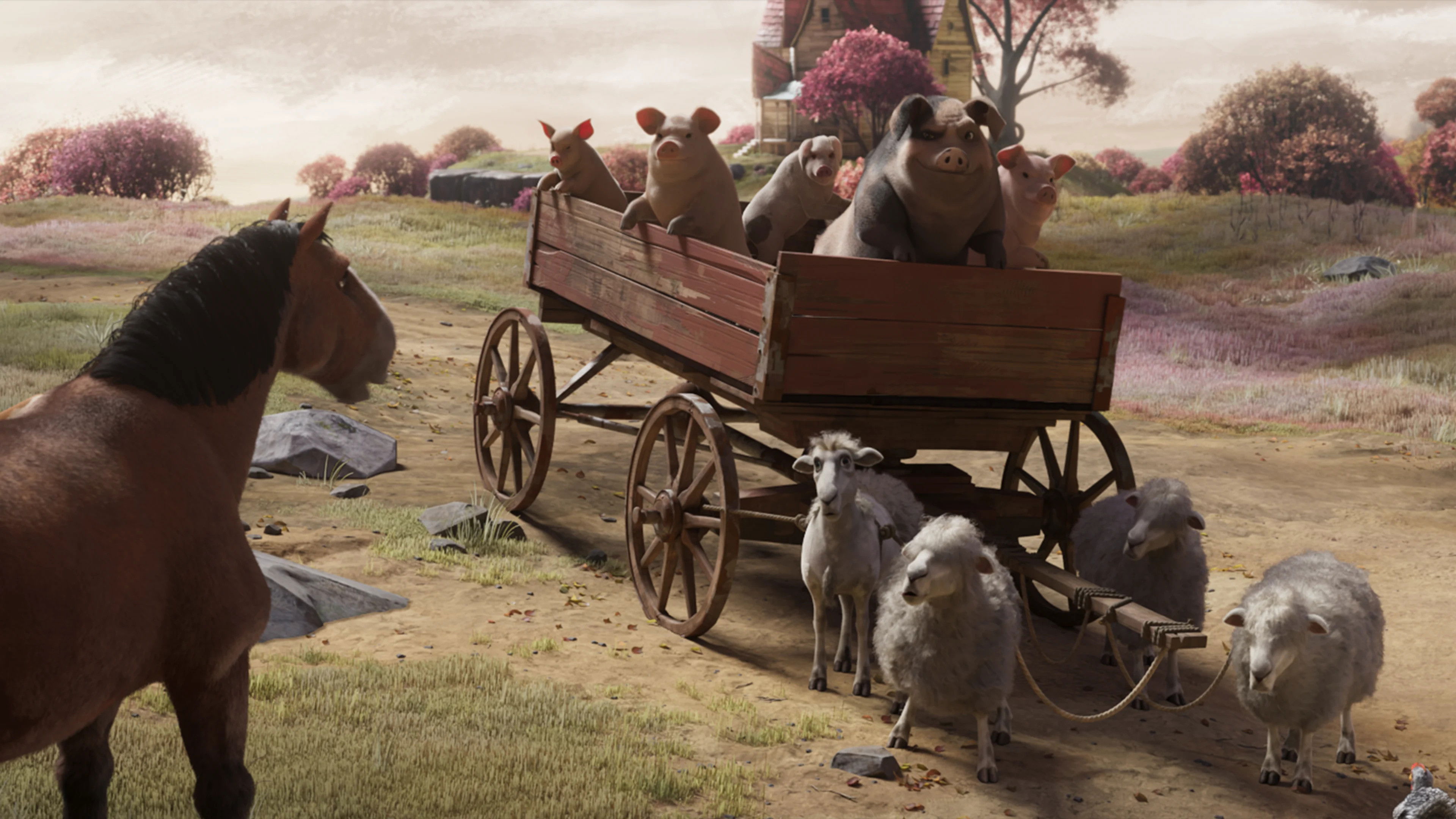
The animation in this film is, for the most part, fine. But the humans in the film look extremely uncanny valley, and occasionally the film will display something that looks like it’s out of the lesser canon of 1990s CGI. It doesn’t help that the artistic direction of the film is “make the daylight scenes look like daylight, make the nighttime scenes look like night,” with the only hint of creative drive being a one-time use of fire that faintly echoes superior shorts.