






An Interview with Writer/Director/Producer Penelope Lawson
We chat with Penelope Lawson about her short film, The Dinner Party, her experience founding her own production company, and fun cinema.

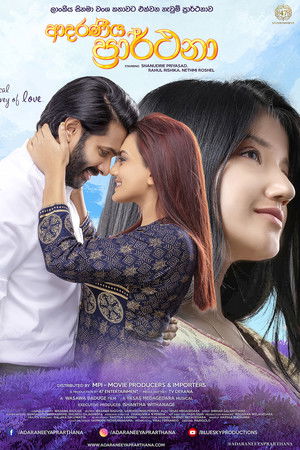
Rahul, confident and hopeful about his new life upon his return to the country; unexpectedly finds himself facing a battle with his fate and love. Torn between two women; Menaka and Parami, he embarks on a journey tainted with broken promises and heartbreak in pursuit of answers.
We chat with Penelope Lawson about her short film, The Dinner Party, her experience founding her own production company, and fun cinema.
As a huge fan of Sean Baker’s Tangerine, The Florida Project, and Red Rocket, I’ve wanted to watch Anora since before it even was released. But life got in the way, my watchlist grew, and honestly, the fact that it was marketed as a romantic comedy put me off. Even with all the critical praise and the five Academy Awards it won last year, I just kept postponing it indefinitely.
This film was filled with great plot points. Unfortunately, they all contradicted each other and clashed. Had the premise of Awake been more consistent and accurately portrayed the real world aspect, I think this could have been an extreme success.
James Cameron’s The Terminator (1984) marks the beginning of a wonderful two-part arc, brimming with style and substance. The film follows Sarah Connor, a waitress living in Los Angeles. One night, a cybernetic organism (Arnold Schwarzenegger) is sent back in time to kill Sarah. A human resistance fighter (Michael Biehn) is also sent back in time, with the intent of saving Sarah from this deadly foe.
When they’re young, they’re America’s darlings but, when they become teens and adolescents, they’re instantly perceived as harbingers of immorality. They’re Lindsay Lohan, Macaulay Culkin, Justin Bieber, and Britney Spears. But, despite what many media outlets, politicians, and the general public may think, they are human beings above anything else. The new Billie Eilish documentary, Billie Eilish: The World’s A Little Blurry, proves this — showing the trials, tribulations, and humanity when growing up with all the world’s eyes on you.
Dead Poets Society relies on patriarchal tropes such as overbearing fathers, contrived brotherhood, and faux-individuality in order to portray its straight white male characters as oppressed.