

TIFF ‘22 Coverage: ‘The Fablemans’
'The Fablemans' is Spielberg's most personal work to date, the cast delights audiences at the TIFF premiere.
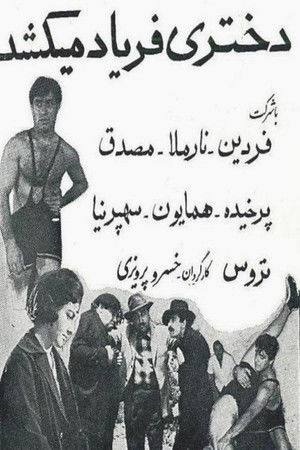


Mustafa Khan Ilchi (Trous) decides to marry off his daughter Maryam to a wealthy old man to save himself from bankruptcy. Maryam, with sadness, leaves her father's house, and in the street, after being harassed by Sosol and Topol, a young wrestler named Sharif arrives and takes Maryam to his mother's house. Mustafa Khan announces his daughter's disappearance in the newspaper, and Sosol and Topol extort money from him by pretending to know Maryam's whereabouts. Sharif's mother, seeing Maryam's picture in the newspaper, asks her to leave their house. After leaving the house, Maryam encounters a blind girl in a coffee shop and gives her necklace and clothes to her. The blind girl is killed by falling into the river, and newspapers report that Maryam has committed suicide. Sharif, with Jafar, Mustafa Khan's driver, goes in search of Maryam and finds her in a village. Sharif defeats his Italian opponent Alberto in a match, and Mustafa Khan embraces him and his daughter on the wrestling mat.
'The Fablemans' is Spielberg's most personal work to date, the cast delights audiences at the TIFF premiere.
American Fiction is a genuinely entertaining film with a few lessons.
An in-depth discussion about anti-Black discrimination in college and professional football.
Overall, “Dark Fate” is a run-of-the-mill flick. Together, Reyes and Davis have excellent chemistry, but their characters’ story is nothing new, lacking surprise and deep emotion. During the middle points, the film drags considerably, and when the action hits, it feels consistently tight, eliminating the rhythm and fluidity of conflicts.
This is ambitious horror filmmaking, and in a lot of ways, I fully admire its ambitions. For me, the film’s sloppiness defines its overall quality.
Mirrorball is full of passion and love for the medium of cinema and is indeed a fitting love letter to La La Land.