Director Anne-Sophie Bine Talks ‘Dog Lover’ and Inception of Film Career
I was able to sit down and talk with the director of the short film Dog Lover Anne-Sophie Bine as she discussed and how she came to be in film.
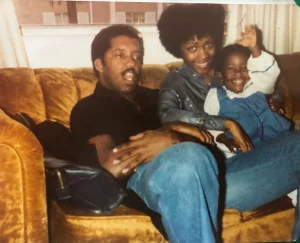
I was able to sit down and chat with Kamilah Rae Lewis, the daughter of the deceased basketball player, Raymond Lewis. She graciously provided insight into who he was as a father and a ball player.
Richard: What was your father Raymond Lewis like when you were growing up? What fond memories do you have of him?
KRL: I have some really fond memories of him. He was a wonderful dad. He was a very typical dad. My mother and father were together since [their] college years. So, coming from a very loving family, I was the first-born daughter and first-born, so I have memories of traveling to LA with him. He used to play a lot of sports Pro-Am, Pro-League games, during that time. So, I have really fond memories of him and other big names that I know now, during this summer playing at the Drew League and things of that nature. So, he was a great dad. I have very fond memories of him.
Richard: Do you remember him playing basketball?
KRL: Yes, I do. I remember him playing in the summer league. I was probably around four or five. Those are some of my earlier memories. I remember a lot of reporters coming to our house. I remember him being interviewed by Sports Illustrated. I remember a lot of important people. I just knew, at that time, they were important. I’d either seen them on tv or the news or something. I knew he was a big deal at a young age.
Richard: When did you first see him struggle with depression and/or alcoholism?
KRL: I probably couldn’t notice it and identify it when we moved from Long Beach. So, I was probably in Middle school when I noticed that there was something going on with my father. I could notice a change. His love for the game, I could notice that changing, as well because my father always ate right. He exercised every day. One of his favorite things to do was to jump rope and I noticed him not doing that as much.
Richard: So, how were you able to cope after his death?
KRL: It was pretty difficult. He died in a pretty tragic way. I had to get his leg amputated. The greatest shooter of all time, in my opinion, having to get their leg amputated and him telling me that if I do the surgery, I’m not going to be able to shoot a jump shot again and him never regaining consciousness after that. It was a difficult pill to swallow as a 21-year-old young lady at the time. Carrying his legacy on and making sure that people know his story, me even finding out things I didn’t know about his story, I didn’t know some of the rules and regulations, when he was in college. Those rules have now changed. I didn’t notice some of the things he did in high school before the three-point line. Me finding out more about him and his legacy just makes me more determined to keep his legacy alive.
Richard: What is one thing you want people to walk away with after seeing this documentary?
KRL: I want people to know who Raymond Lewis was and what sacrifices that he made, so that people could get paid what they get paid today, especially in the game of basketball, especially, minority basketball players and I also want people to have a Plan B. Make sure they finish college or have a Plan B in case your Plan A doesn’t work.