Exit 8: The Endless Loop in the Modern Society
A man found himself stuck inside the passage to the subway exit on the way to work.



Starting from a thundering thud, a figure was walking towards us from the distance in a cemetery. In the next shot, the camera was pointing at the sky from below, and a lady was crouching down while putting the bouquet down. After that, the protagonist, Joan, came into the frame and inspected the bouquet, therefore looking at the camera. We were firstly introduced to Joan through the view of a bouquet. Throughout the film, the camera constantly takes the angle of an unknown object to watch Joan—Joan was not the only observer even when she was the only living being in the room.
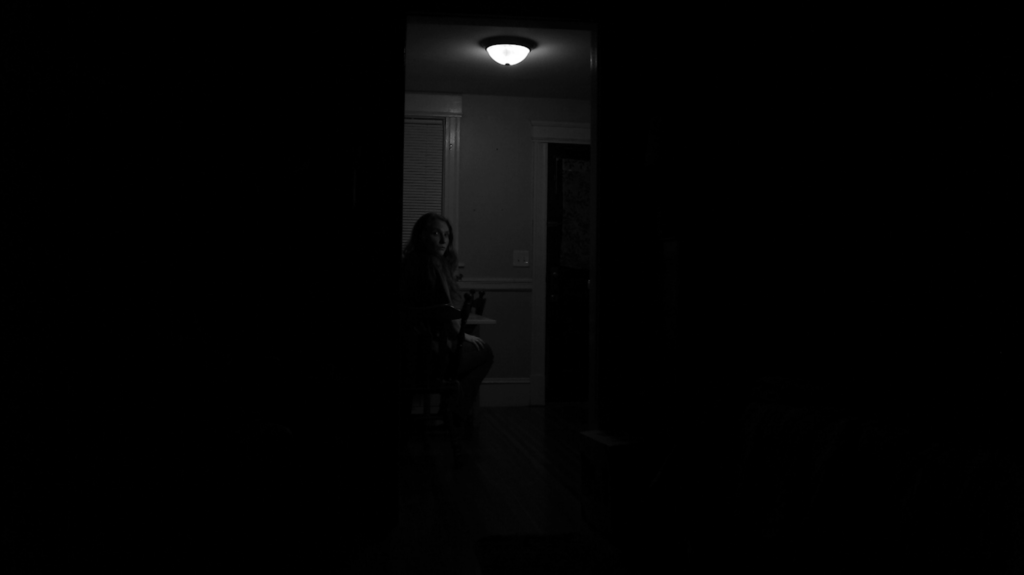
A montage shows a series of close-ups of still life and small gestures in Joan’s routine: the hand pressing the garden pliers, the door bar, the swinging car key, the moving tiled floor, the fork putting food in the mouth, etc. This series is accompanied by marvelous sound design of the fabric rustling, wood crunching, and metals clicking. In some shots, the camera is often set from a corner of the ceiling or through the narrow corridor, watching Joan from above or from the back. The unusual angles blur the distinction between the positions of the observer and the observed. There was a two-way gaze between the objects and the subject. Not only Joan, we feel being watched, too. Seeing the close-up of the dotted petals of lilies, we know that Joan has taken the bouquet from the cemetery home, and they began to sense the abnormal phenomenon at home.
The routine continued, and Joan took home a stone that a visitor put on top of the gravestone. After listening to the foot-stomping sound and peeking from the door viewer in vain, Joan fled to a nearby restaurant. The atmosphere of the new space still matches the suffocating unsettlement that resides in Joan’s home. Joan was greeted by a man on the seat with a familiarity. The being materialized in front of Joan doesn’t seem to be an ordinary guy. Speaking friendly and eloquently, he knew Joan’s name and their usual order. They chatted about an accident from a long time ago, how Joan lost their leg, the person (“Oracle”) who caused this accident, the dream of Oracle, and how Oracle told Joan about this man sitting in front of Joan. During the obscure conversation, Joan’s outfits changed, and their tone shifted. The time and space are all mixed up together.
A signature of this mystery Black man is his unusual acrylic fingernails repeatedly clicking on the table—long and pointy with white outlines. Adding up to his stylish outfit and the sly talking tone, we see a glimpse of queerness. Moreover, Joan also presented with a sense of masculinity in their styling and gestures from the beginning. These two characters are in a delicate balance: the mystery man lured Joan to open up about their deep fear and desire through dreamlike dialogues, mirroring Joan’s unconsciousness.
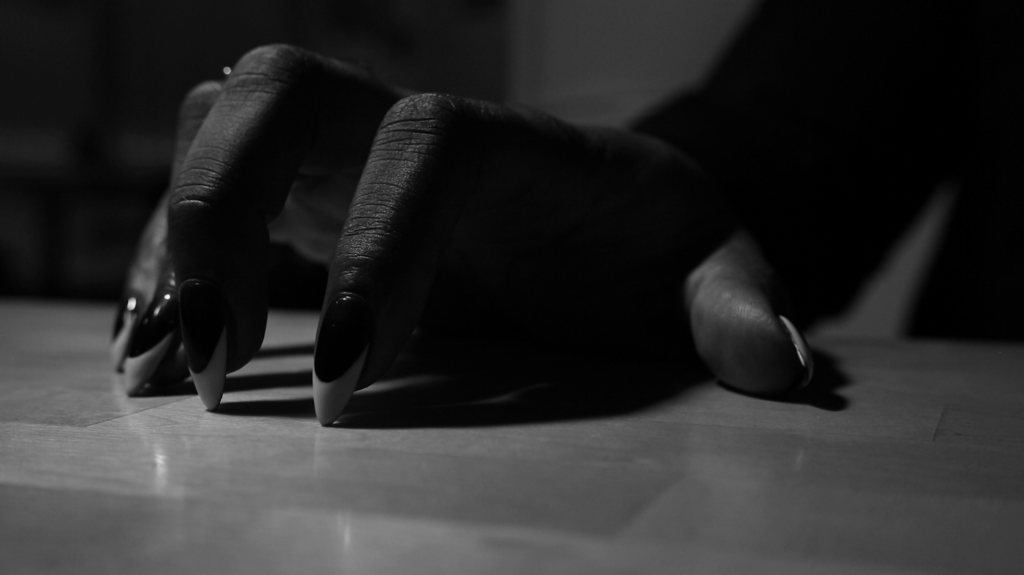
After Joan took the food home upon request, the fridge was filled with the same takeaway boxes. As it’s hinted before, Joan’s repeating habit of taking home tributes is finally settled. The montage of close-ups presented that Joan’s routine is piling up to an escalated outcome. As the blood fell on the petals previously, the blood fell on Joan’s face. The film ended with a bloody hand with the same acrylic fingernails brushing Joan’s face while the familiar voice said, “Welcome home,” and Joan screamed.
The outstanding style captured a disturbing ambience of being monitored by an uninvited presence at home. The continued tension comes from the anxiety for the possible encounter with an unknown being and the piled-up outcome of unconscious guilt for a recurring habit. With the visual effects of double vision, the illusive narrative, and the dialogue with the mystery character about dreams in outer space, this film reminds me of Inland Empire and season 3 of Twin Peaks. I believe this short film can be counted as “Lynchian,” which is a style that is very challenging for the actors. By the standard of “Lynchian,” the ending is rather explicit, and the tone for the dialogue is either not banal enough or is too dramatized. However, by the standard of this film itself, this unique film clearly showcases its own eccentric characteristics and unconventional storytelling that transcends the unconsciousness and consciousness. Even in the short form, the story is completed with layers, leading us to another ominous world in black and white.