I’ve read Ursula K. Le Guin’s philosophical short story, The Ones Who Walk Away from Omelas, several times, and I even wrote an essay deconstructing it in college. Because I am so familiar with its concept, I tend to associate it with the movies I watch. One of the latest I’ve linked it to is Cillian Murphy’s character in Small Things Like These, who refuses to let young women suffer under the Catholic Church and the Magdalene Laundries just so his small Irish town can continue to stay in their good graces. He was one of those who would rather walk away from Omelas than accept his community’s prosperity at the expense of others’ suffering.
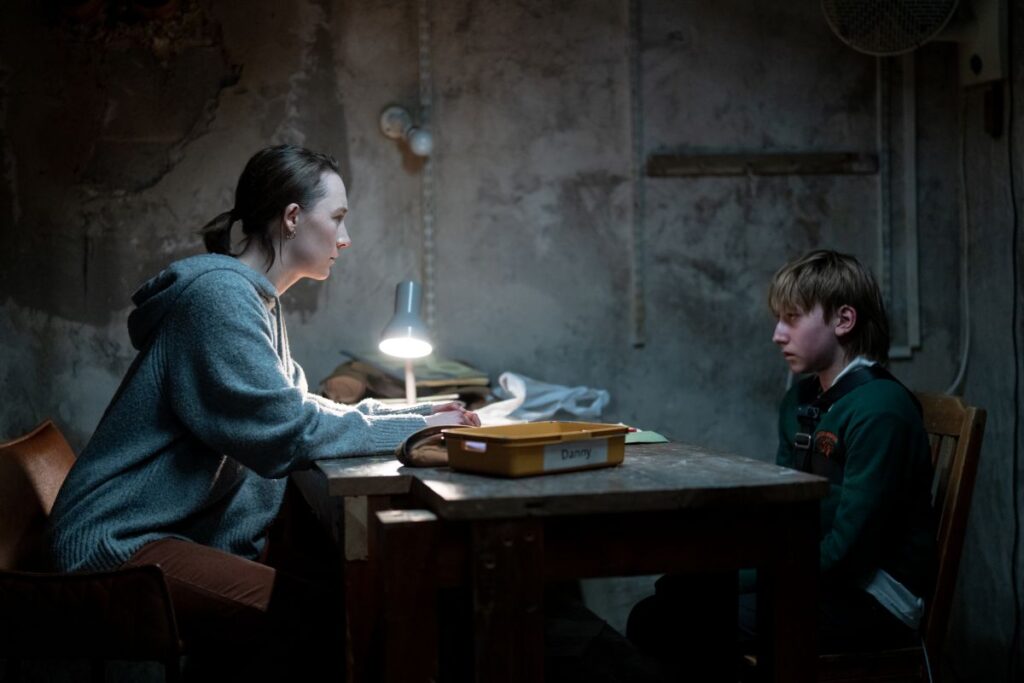
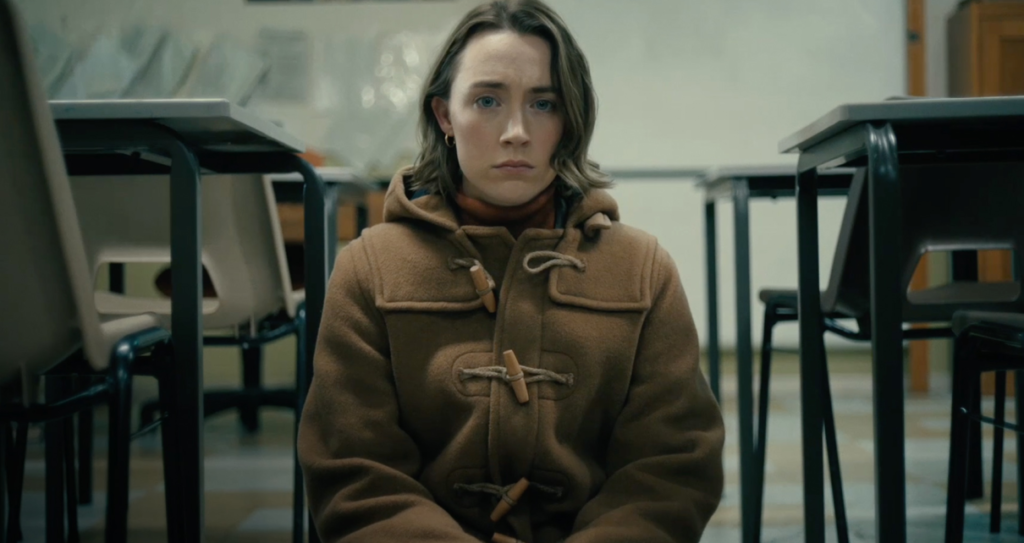
A couple of months later, I found myself watching Bad Apples, starring the absolutely brilliant Saoirse Ronan. Unlike before, when I was drawing connections to Le Guin’s short story quite freely, I noticed right away that this movie reinterprets it precisely. Ronan plays Maria, an overwhelmed primary school teacher whose class is constantly disrupted by a single troubled student. Facing the threat of termination, she locks the boy in her home basement, a dark decision that quickly proves incredibly fruitful for the performance of the rest of her class and the survival of her career.
Adapted by Jess O’Kane from Rasmus Lindgren’s Swedish novel The Unwanted, and directed by Swedish filmmaker Jonatan Etzler in his English-language feature debut, Bad Apples is a masterful satirical thriller. By placing a story about processing, sorting, and discarding the “rotten” elements of youth in a country known for its apple harvests, Etzler introduces an additional layer of irony, turning the agricultural setting into a metaphor for the film’s own preoccupation with identifying and discarding what society considers defective.
Exceptionally paced and edited, Etzler’s directorial vision filters the story through an absurd, outcome-obsessed bureaucracy in which the modern education system prioritizes performance over human empathy. It’s not far-fetched to say that if you disregard the comedic and ridiculous scenes, Bad Apples would fit very well into the horror genre. The sonic heartbeat of the film relies on a relentless, mechanical pulse that mimics an unstoppable industrial machine. This driving score perfectly embodies the systemic, bureaucratic pressures crushing Maria, building an atmosphere of mounting anxiety and dread while simultaneously giving you the permission to laugh at the sheer absurdity of the situation.
The parallel with Le Guin’s story, where the utopian city of Omelas survives and thrives directly because of the misery and torment of one child locked away in a basement, becomes obvious when the school’s parents and administrators learn of what Maria has done. Instead of exposing her, they enable her to keep the boy imprisoned, ensuring that their own children can continue to prosper.
The title of the movie is ironic because, although the troubled student is framed as the literal “bad apple” whose presence corrupts his peers, the true “bad apples” are the adults who choose to hide him away so their own children can thrive. Even Maria, who initially shows remorse and wants to surrender herself to the police, ends up going along with the parents’ wishes because she, too, benefits from this situation. The hypocrisy and cruelty of the arrangement Maria has impulsively set in motion are overwhelming. Just like in The Ones Who Walk Away from Omelas, the people who benefit from the arrangement must confront an uncomfortable moral choice: accept the suffering of an innocent child for their own children’s benefit or relinquish the privileges made possible by that suffering. And just like in Le Guin’s story, very few walk away.