



“Fjord” is Beautifully Indecipherable
Fjord, like its story, is not a conclusion, but a beginning.

Vincent Maraval, born in July 1968, is a French producer. He is one of the founders of the international distribution and sales company Wild Bunch. He also holds the position of international sales director there. Vincent Maraval began his career in the video department of UGC before working at TF1 and then Studio Canal . Within this entity, he created the Wild Bunch label to promote independent cinema. He left Canal+ in 2002 at the time of the arrival of Jean-Marie Messier. He was the one who brought Harvey Weinstein into the promotion of Michel Hazanavicius's film The Artist: he was the one who invited him, in March 2011, to see a film without specifying what it was about. In December 2012, he sparked controversy by publishing an article in the daily newspaper Le Monde in which he argued that French actors were overpaid. In his analysis, he asserted that big-budget French films were not financed by box office receipts but by money from television networks, and that it was solely thanks to this money that French actors could obtain such high salaries. His analysis provoked numerous reactions within the film industry, such as that of Jean-Michel Frodon, who partially refuted the claim while acknowledging certain perverse effects in the French film financing system, and that of Serge Toubiana, who deplored the lack of nuance in Maraval's argument and feared. that his text would lead to questioning the French film financing system. For his part, Jean-Philippe Tessé notes that "the stone thrown into the pond by Vincent Maraval has not finished splashing", but that "Maraval's angle of attack, suggesting that the State pours millions to enrich a few wealthy people, has led the debate down a false path." In Elia Suleiman 's film It Must Be Heaven (2019) , Vincent Maraval appears in the role of a film producer who refuses to finance the film. Description above from the Wikipedia article Vincent Maraval, licensed under CC-BY-SA, full list of contributors on Wikipedia.
Fjord, like its story, is not a conclusion, but a beginning.
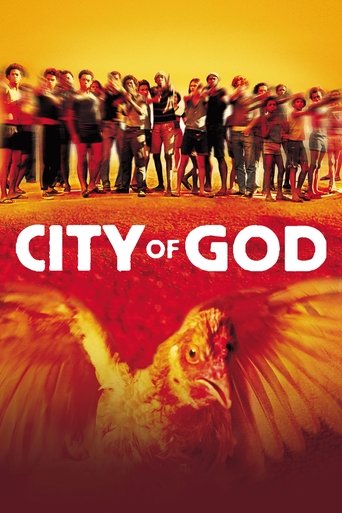
'City of God' depicts the cylindrical cycle of violence that is forced upon the underprivileged.
These confines won’t really encourage you to read the film as a metaphor for the nerve-inducing experience we’ve all been through over the last year, however — and in the interest of maintaining your dignity, you probably shouldn’t. While the sociopolitical commentary may have worked for the similarly-themed Buried (2010), in which we find Ryan Reynolds on his own buried alive in the Middle East, but this futuristic take on the premise is best left as a piece of distracting entertainment. Nevertheless, the atmosphere is no less suffocating, literally and dramatically.
Rather than focusing on the bleak, cynical aspects of life post-pandemic, the focus is optimistic and hopeful.